At Homeland Ghana Educational Foundation, we believe every girl deserves the chance to learn without barriers. In rural Ghana, girls continue to pursue education despite uneven resources and support. Their daily experiences, shaped by access to learning materials, classroom conditions, attendance, and menstrual health products determine how consistently they remain in school and how fully they participate in lessons.
Everyday Barriers to Education
For many girls, staying in school depends on everyday conditions:
- Availability of textbooks and learning materials
- Consistency in attendance
- Classroom structure and teacher engagement
- Access to menstrual hygiene products
Research by UNICEF indicates that inadequate menstrual hygiene support contributes to absenteeism among adolescent girls in parts of sub-Saharan Africa, including Ghana.
Girls’ experience in context
Access to basic education in Ghana has improved over time, with more girls enrolled at the primary level. According to the Ghana Statistical Service, primary school net enrolment rates have remained above 85% in recent years, with near parity between boys and girls. However, rural areas face greater challenges:
- Limited learning materials
- Irregular attendance due to household responsibilities
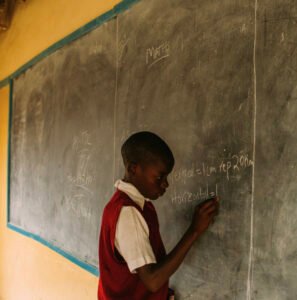
- Classrooms that do not always support consistent participation
These factors do not always prevent girls from enrolling, but they shape how they remain in school and how they progress. As girls move into upper primary and junior high, the pressure intensifies. Attendance becomes less consistent, participation declines, and transitions between levels are often disrupted.
Attendance and Learning Continuity
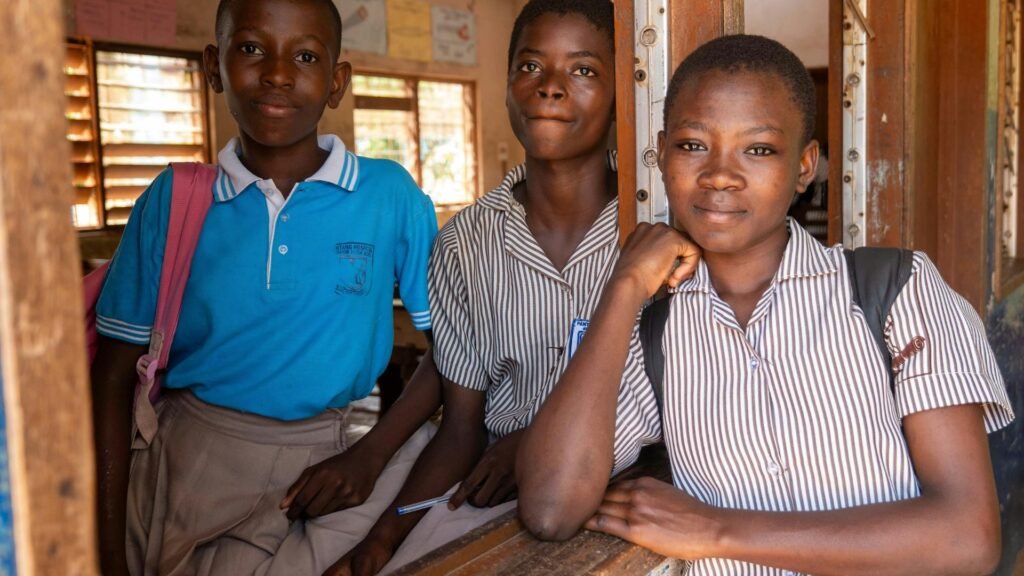
In rural communities, girls often balance school with caregiving, household work or family activities These responsibilities interrupt attendance, affecting continuity of learning. When attendance is steady, girls build knowledge progressively and remain connected to lessons. Inconsistent attendance, however, undermines confidence and participation.
Participation and confidence in the classroom
In some settings, girls are present but less visible in lessons. Participation can be shaped by classroom dynamics, teacher engagement, and how comfortable girls feel contributing.
The presence of female teachers can also influence this experience. In classrooms where girls are taught by female teachers, there is often greater familiarity and ease in interaction. Female teachers can serve as visible examples within the learning environment, shaping how girls see their own place in education and their ability to contribute within it. Evidence from the World Bank suggests that female teachers can have a positive effect on girls’ academic engagement and aspirations, particularly in contexts where gender norms influence classroom participation.
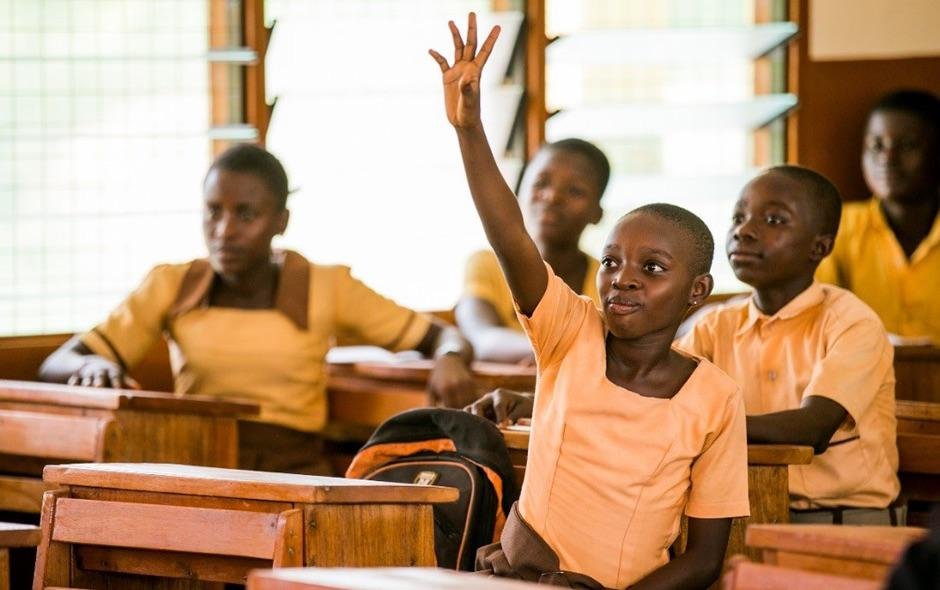
Confidence grows through repeated involvement, answering questions, contributing to discussions, and completing work independently. These are small, consistent actions that build familiarity with learning and over time, participation and confidence begin to reinforce each other supporting continued learning.
Beyond Basic Education in Ghana
For girls, completing basic education is one stage within a longer process. Transitions beyond this level are not always straightforward and continued education depends on sustained support, clear pathways, and the ability to remain engaged beyond the classroom.
Where follow-up and continued connection are present, girls are more likely to move forward into the next stage of their education. Without this continuity, some disengage at the point of transition. This stage is often less visible, but it plays a significant role in shaping longer-term outcomes. According to the Global Partnership for Education, each additional year of schooling for girls is associated with improved long-term outcomes, including higher future earnings and delayed early marriage.
Within this context, the work of the Homeland Ghana Foundation focuses on strengthening these conditions through practical, school-based activities like menstrual health education and childrights workshops. Over the past four years, we have also sustained a menstrual support initiative in the Upper East Region. By providing sanitary pads to basic school girls each month, the program has reduced absenteeism linked to menstruation and helped ensure that girls remain actively engaged in their classrooms.
Supporting girls’ empowerment through education
Empowerment in education takes shape through the conditions girls experience consistently in school:
- Access to learning materials allows girls to engage directly with lessons, practise independently, and build continuity in their learning.
- A stable pattern of attendance supports progression.
- Access to menstrual health education and products.
- Classroom environments where teachers engage students consistently create space for participation and confidence.
- Female teachers provide visible examples of women within education, shaping how girls see their own possibilities.
- Family and community support reinforces the value of girls’ education, stabilizing attendance and transitions.
These elements; materials, attendance, participation, representation, and community support work together over time. Their impact is not immediate, but consistent. Through them, girls are able to remain in school, engage with learning, and continue progressing through their education.
Closing reflection
Girls in rural communities continue to engage with education within the realities around them. Where learning conditions are stable, attendance is supported, and participation is possible, their experience of education becomes more consistent. Over time, this consistency shapes how girls learn, how they progress, and how they see their place within education.
At Homeland Ghana, we are committed to ensuring that every girl who dares to learn has the opportunity to thrive. Together with families, communities, and educators, we can strengthen rural girls’ education and empower the next generation of women leaders.