Recent discussions around teacher shortage in Ghana have drawn attention to a key issue within the education system: how teachers are distributed across the country.
While the conversation is often framed as a shortage in overall numbers, recent reporting points to a more specific challenge. In many cases, trained teachers are available, but not always in the districts where they are most needed.
Recent coverage highlights this perspective, noting that gaps could be addressed through more effective distribution and a willingness to take up postings in underserved districts.
Understanding this distinction helps clarify how teacher shortages are experienced at the school level and across different communities.
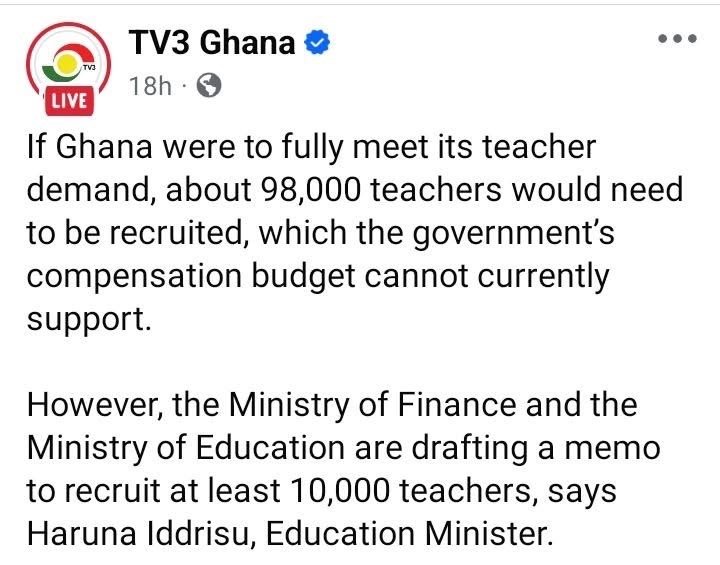
Ghana’s teacher shortage is increasingly visible in system-level data. As of 2026, an estimated 30,000 classrooms across the country are operating without teachers, following a halt in recruitment in 2025 . Education analysts note that the system requires at least 15,000 new teachers annually to maintain stability, taking into account attrition and uneven distribution.
As education policy analyst Kofi Asare noted in recent reporting,
“Ghana… does not lack qualified teachers… yet about 70,000 trained education staff remain at home due to delays in recruitment.”
At the same time, Ministry of Education data shows that over 26,000 newly trained teachers were inducted and more than 6,500 licensed in 2024, highlighting a persistent gap between teacher supply and actual deployment across districts.
Where Teacher Shortages Appear in Basic Education in Ghana
Across Ghana’s basic education system, access to teachers is not evenly distributed.
According to the Ghana Education Service, teacher deployment is managed centrally, yet differences between urban and rural schools remain part of how the system functions.
Recent education data has also shown that pupil-to-teacher ratios tend to be higher in rural districts compared to urban areas, reflecting how staffing gaps are experienced differently across the country.
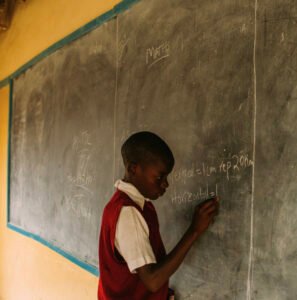
Some schools, particularly in urban areas, have relatively stable staffing. Others, especially in rural communities, continue to experience gaps. These differences affect how teaching and learning take place from one school to another.
In schools with fewer teachers, it is common to see:
- Classes combined across year groups
- Reduced instructional time
- Teachers covering subjects outside their specialisation
These conditions shape the rhythm of learning in ways that are not always visible in national data, but are part of everyday school life.
Teacher Distribution in Ghana: What Shapes It
Teacher distribution in Ghana is influenced by a range of practical factors.
Research and sector analysis, including work referenced by UNESCO, often point to living and working conditions as key considerations in teacher placement, particularly in rural areas.
For many teachers, postings are not only professional decisions but also personal ones. Considerations such as housing, access to healthcare, proximity to family, and opportunities for further study all play a role. Where these conditions are limited, certain districts may find it more difficult to attract and retain teachers over time.
As a result, differences in staffing persist, even within the same region.
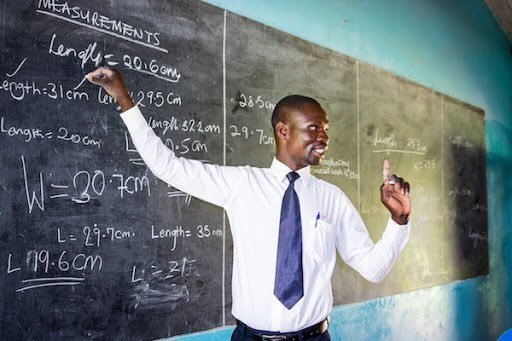
Recent public discussions have pointed to the need for more balanced teacher deployment in Ghana, including encouraging postings to districts where demand is higher.
These conversations reflect a growing focus on how the system functions in practice not only how many teachers are trained, but how they are placed and supported within schools.
Teacher trainees themselves have also raised concerns about the structure of recruitment and deployment. In 2026, the Teacher Trainees’ Association of Ghana warned that limited recruitment exercises risk leaving large numbers of qualified teachers without placement, despite shortages in schools .
Broader discussions on equitable teacher distribution are also reflected in global education analysis, which highlights how deployment systems and incentives influence where teachers work and the discussions across the sector often point to a combination of policy coordination and improvements in local conditions.
What This Looks Like in Classrooms
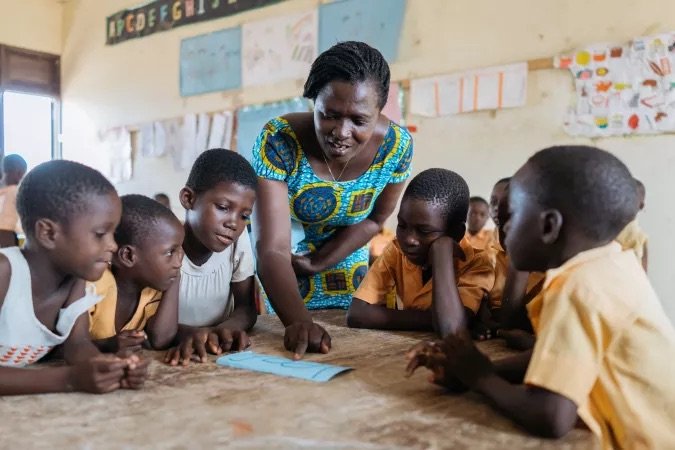
At the classroom level, teacher availability shapes everyday learning.
Where staffing is limited, lessons may be shortened, subjects rotated less frequently, or learning paced differently. Schools often respond in practical ways, adjusting timetables and responsibilities to keep learning going. These adaptations reflect both the constraints schools work within and the effort to maintain continuity for students.
A Clearer Way to Understand Teacher Shortage in Ghana
Framing teacher shortage in Ghana as a question of distribution offers a more grounded view of the situation. It highlights the importance of looking beyond national figures to understand how resources are shared across communities.
At its core, the conversation is about access ensuring that classrooms in all parts of the country are supported in ways that allow teaching and learning to take place steadily.